7 Halloween Pet Safety Tips



Chewy
Halloween can be fun for people as we celebrate the fall, spookify our homes, and dress up in our favorite costumes. However, the unusual sights, sounds, and smells of the holiday can be sources of stress for cats and dogs.
Not only can Halloween be frightening for pets, but it can also be dangerous. Many candies are toxic to animals; pet costumes can range from uncomfortable to unsafe; and decorations might tempt our pets and expose them to something harmful.
Extra precaution is necessary to safely celebrate this special day with your pets. Here are some Halloween safety tips for pets.
Halloween Pet Safety Tips
1. Keep Candy and Chocolate Away From Your Pet
Those tempting bowls of candy are seemingly everywhere during the season—and they can be dangerous for your pets.
While all candies and sweet treats are off-limits to pets, two types of candies are especially dangerous:
Sugar-Free Candies
Perhaps the largest concern comes from sugar-free candies containing the artificial sweetener, xylitol. Even a small amount of xylitol can be fatal to dogs and cats. Be sure to keep any products containing xylitol away from your animals.
If you think they might have ingested any candy containing xylitol, contact your veterinarian immediately.
Chocolate
Another more easily recognized danger is chocolate, especially dark or baking chocolate. Chocolates contain ingredients that are toxic to dogs and cats.
If your pet has eaten chocolate, call your veterinarian right away. It is helpful to know what type of chocolate it was (baking, dark, milk, etc.) and how much might have been eaten.
Fortunately, there are plenty of pet-safe Halloween recipes you can create for your pet to enjoy safely.
Or treat your pet to store-bought Halloween treats for dogs and for cats, like the following:
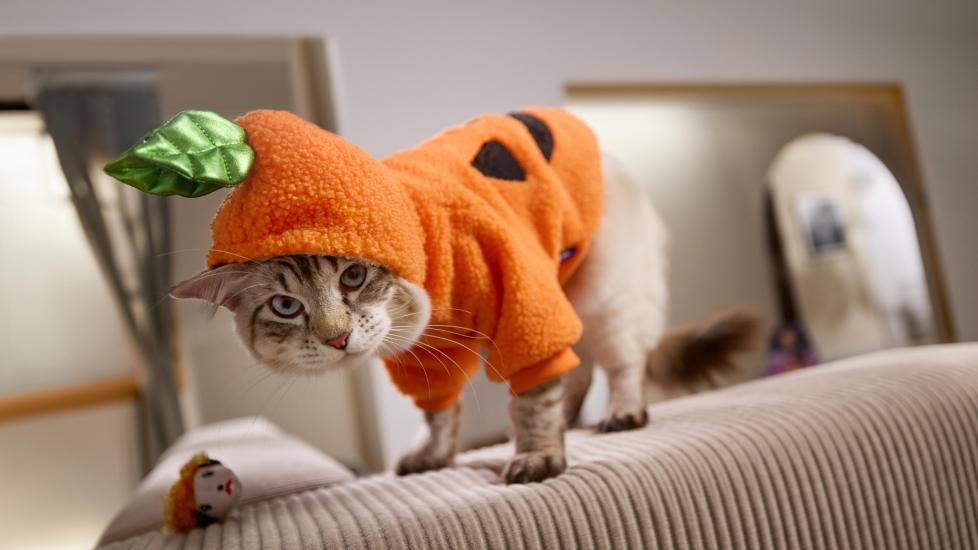
2. Be Cautious With Pet Halloween Costumes
Yes, your pet looks adorable dressed as a red and black ladybug. But as cute as these costumes are, not all pets are comfortable in costumes.
Costumes need to fit properly without restricting movement, causing trouble breathing, or rubbing anywhere that might cause red spots or sores.
Pets can’t tell us what is bothering them about a costume so they may try to remove it themselves. In the process, they may chew off and ingest a portion of the costume, which could cause intestinal obstructions or other emergency conditions.
If you want to put a costume on your pet, make sure it fits properly, and then supervise your pet the entire time they wear the costume. Leave it on for a short period of time (taking some cute photos to share with friends and family), then remove the costume before it makes your pet uncomfortable or they get a chance to swallow any pieces of their costume.
If you see the following signs of discomfort or anxiety in your pet, take the costume off right away.
Signs of anxiety in dogs:
-
Lip licking
-
Head turning
-
Tail tucked
-
Stillness
-
Running away
Signs of anxiety in cats:
-
Pacing or restlessness
-
Hypervigilance
-
Trembling
3. Keep Dangerous Halloween Decorations Out of Your Pet's Reach
Before you hang up any seasonal decor, make sure it’s safe for your dog or cat to be around. Dangerous Halloween decorations include:
-
Open flames: If your pet jumps near a pumpkin with a candle inside, it is possible for them to start a fire or suffer from a burn. Make sure any open flames are stored high and away from the paws of your pet.
-
Electrical cords and wires: Many other decorations contain wires, which are dangerous if chewed. Mouth burns can occur in puppies and kittens who have bitten into cords associated with holiday decorations. Running the wires through pet-proofing materials like conduit, PVC, or even fish tank tubing can provide good temporary protection.
-
Fake cobwebs: Long, stringy decorations, like those that make up decorative spider webs, can get stuck in the intestinal tract after being consumed. Keep these decorations up high and out of the reach of your pet—or skip them altogether.
-
Rotting pumpkins: Fresh pumpkins and pumpkin seeds are safe for dogs and cats in small quantities. If the pumpkin or seeds are moldy or rotting, however, there is a concern. A chunk of pumpkin rind could also cause an intestinal obstruction.
-
Glow sticks: While the liquid inside glow sticks is nontoxic, it tastes awful to pets. According to the ASPCA®, pets that bite into glow sticks may begin drooling and race around the house. Glow sticks can also contain glass fragments that cause damage to your pet’s mouth and digestive tract.
-
Fog machines: The solution in fog machines may be toxic to pets, so either don’t use a fog machine or keep pets away from the machine and its fluid.
4. Ensure Pet ID and Microchip Info Is Up to Date
Because there is a higher-than-average risk of your pet escaping when doors are opening or closing, make sure that they are wearing their collars with current, updated contact information so they can quickly be returned home. This is a good time to have that microchip data updated as well.
5. Secure Your Pet in a Safe Area Indoors on Halloween Night
The constant opening and closing of the door can provide an opportunity for a frightened animal to run out into a dark night. This can result in all kinds of frightening consequences, and in some areas, black cats are particularly prone to abuse on Halloween.
Here are some ways to help prevent your pet from escaping the home:
-
Keep an eye on your pet.
-
Keep pets away from the door.
-
Put up a dog gate.
- Keep your pets safely crated.
-
Keep them in a secure and quiet room.
-
Ask guests to keep the door closed.
6. Keep Anxious Pets Calm
One of the most common worries for both dogs and cats is the stress caused by Halloween. The doorbell may ring constantly as trick-or-treaters arrive, and this type of activity can be confusing and frightening to your pets.
Signs of stress and anxiety in dogs and cats include:
-
Excessive vocalization
-
Pacing
-
Going to the bathroom in the house (or, for cats, outside of the litter box)
Here are some ways to help keep your anxious and stressed-out pet calm:
-
Provide a quiet safe zone. The safest option is to provide them with a private safe zone. Turn on music or the TV to help mask the sounds of the doorbell ringing and some of the unusual noises associated with Halloween festivities.
-
Use calming vests. Anxiety and calming vests like ThunderShirts® can help calm a frightened pet.
- Use calming diffusers. Diffusers like ThunderEase for dogs and Feliway for cats release special pheromones to help calm pets.
-
Board your pets. If you’re hosting a Halloween party or expecting many visitors, consider taking your pet to a boarding facility. Usually, a stressed animal will prefer being in a quiet place and left out of the festivities, even if that means a boarding kennel for the night.
In all cases, it is important to minimize the stress the evening could cause and the risk of escape. If you're having a Halloween party or are greeting trick-or-treaters, keep pets in a safe part of the house where they won't be tempted to run out.
7. Think Twice Before Taking Your Pet Trick-or-Treating
Trick-or-treating can be fun for children and adults alike—but for many pets, it’s likely to cause stress and sensory overload. Trying to navigate crowds of children, unfamiliar faces and places, all in the dark, is a lot for any dog or cat to handle.
Before taking your pet trick-or-treating, ask yourself:
-
Is my pet comfortable around strangers?
-
Is my pet able to stay calm and well-behaved in crowds?
-
Am I able to contain my pet if they become agitated?
-
Will it be easy and accessible for me to bring my pet home if necessary?
If the answer to any of these questions is no, it’s best to leave your pet at home while you go trick-of-treating.
Halloween is a fun and whimsical start to the holiday season, but it can be confusing, frightening, and dangerous to your pet. Fortunately, it is possible to take just a few simple steps to make the holiday fun and safe for all.