Why Do Dogs Put Their Paws On People?


franckreporter/E+ via Getty Images
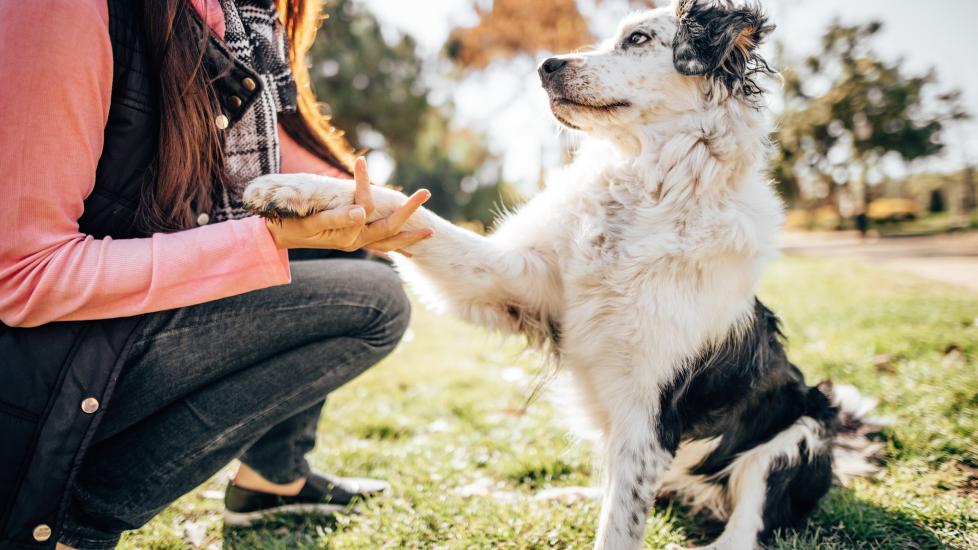
Dogs use their paws for many behaviors. They can tap, pat, pounce, whack, push, and even hit us with them. But what does this mean? Why do our dogs put their paws on us?
Key Takeaways
- Pawing is a natural form of communication for dogs, often used to express a need.
- Understanding a dog’s body language is important for interpreting the reason behind their pawing.
- A dog pawing can sometimes be due to stress, and this should be discussed with your veterinarian.
- To discourage unwanted pawing, pet parents should avoid reinforcing the behavior.
Why Does My Dog Paw at Me?
The current theory is that a dog uses pawing to communicate an unmet need.
Dog pawing begins as an instinctive behavior in puppies. And as they age, dogs learn pawing is a useful communication tool because pawing usually results in pet parents tending to their dog.
Your pup figures out that if they want something—like food, attention, or access—pawing is a proven way of getting it.
Because pawing is a natural behavior from birth (pups will paw at their mothers for milk), dogs will use this communication tool when in need. Additionally, their humans will typically respond to pawing.
But because not all pawing is a request for attention, it’s important to be aware of what else your dog is doing. Their body language can give you important information about their emotions and what they’re trying to accomplish by pawing at you.
The current theory is that a dog uses pawing to communicate an unmet need.
They Want Your Attention
If your dog is bored, they may put a paw on you to seek your affection or to initiate play.
If you’re not able to engage, then providing a self-directed activity is a great way to keep your pup busy. Try dog puzzles or food-dispensing toys, like a Kong or a Toppl. You can stuff these with vet-recommended dog treats.
You can also freeze toys with peanut butter, bananas, and Kong Stuff’N Eat fillers to extend the fun. This can provide you more time to yourself without being continuously pawed by your furry companion.
They Need To Go Out
Whether your dog needs to go to the bathroom or is chasing a sunspot outside, a paw can mean that your pup wants to go out. Before pawing at you, your dog may show other signs that they need to go outside, like standing by the door.
They’re Hungry
Many pet parents will notice that their pup becomes restless about 30 minutes before mealtime. When their stomach starts to rumble, your dog may use their paw to alert you that they’re hungry.
If they’re pawing for food and their next meal is a while away, consider providing them a long-lasting snack like a bully stick.
Always speak to your vet before introducing new treats to your dog, and make sure to keep treats to a minimum (no more than 10% of a dog’s daily calories).
They’re Showing Their Love
Love is an experience triggering a chemical reaction involving serotonin, oxytocin, and dopamine. When we’re near a person that produces this reaction, we want more.
Because they possess all three neurotransmitters, dogs can experience love and often show it through pawing, such as if they rest a paw on your arm while you’re petting them.
They’re Nervous
Dogs can also use their paws as part of a bigger cluster of body language indicators to communicate emotions like stress or anxiety.
If a dog lifts their paw without touching anything, this might be a sign of stress. But touching someone can also be a stress response, especially if they’re trying to push you away with their paw.
If your dog is showing stressful pawing, remove them from the situation.
Make sure to always give your dog time and space to acclimate to the event or the new person. This might mean taking them out for a walk, into the yard to play, or allowing them to calmly observe from a safe distance.
A Dog Put a Paw on Me. What Should I Do?
If your dog paws you, you should first look at the situation. Pawing that indicates stress, anxiety, or medical issues needs to be handled differently than pawing for pets and playtime.
By observing what they do before they paw, you may be able to figure out what they’re looking for. Ask yourself a few of these questions:
-
Does your pup come and stare at you first?
-
Do they take a lap around the room?
-
Do they look at one of their toys?
-
Do they circle their food bowl?
-
Do they walk to the back door?
If you’re struggling to identify why your dog is pawing at you, speak with a reputable behaviorist to help sort it out.
If an unfamiliar dog puts their paw on you and it makes you uncomfortable, back away and ask the pup’s pet parent to intervene.
If your dog likes to paw, they may enjoy talking button toys, like the Hunger for Words Talking Dog Toy. With this toy, your dog can use their paw to tap a button with a symbol on it to express what they want.
How To Stop Your Dog From Pawing You
People typically reinforce this behavior by instantly providing the wanted outcome for their dog. Let’s look at an example:
A dog is ready for some affection, or perhaps they want to play, but you’re not paying attention. They walk over and put their paw on your lap.
Wanting to discourage this behavior, you say “No.” But then, you stand up and engage with your dog.
Even though you’ve used a verbal correction, like the word no, the dog got the attention they were looking for and learns that pawing is effective to get something they need.
Instead, when a dog paws at you:
-
Get up
-
Ask for an alternate behavior, like sit
-
Give them what they want
Once your dog learns that sitting gets their needs met, it can replace their pawing behavior.