Trazodone for Dogs: Dosage, Side Effects, and What It Treats in Dogs



mgstudyo/E+ via Getty Images
PetMD’s medications content was written and reviewed by veterinary professionals to answer your most common questions about how medications function, their side effects, and what species they are prescribed for. This content shouldn’t take the place of advice by your vet.
What Is Trazodone Used for Dogs?
Trazodone is a prescription antidepressant for humans that is commonly used in the veterinary field to treat certain behavior disorders in dogs.
Trazodone may help calm dogs that suffer from separation anxiety or are triggered by loud noise events such as fireworks or thunderstorms.
Trazodone is often prescribed for dogs as a mild sedative to reduce anxiety prior to stressful events such as veterinary visits or grooming appointments.
Your veterinarian may also prescribe trazodone for your dog after surgery, especially if recovery requires your dog to rest in a crate or other confined space while they recover.
Trazodone for dogs can be used alone but is frequently used in combination with other anti-anxiety medications.
Is Trazodone FDA-Approved?
While trazodone is FDA-approved for human use, it is currently not FDA-approved as a veterinary medication.
It is, however, readily utilized in the veterinary field, and veterinarians can legally prescribe certain human drugs in animals in certain circumstances. This is called extra-label or off-label use because this use isn’t described on the drug label. It’s important to follow your veterinarian's directions carefully.
Compounded Trazodone
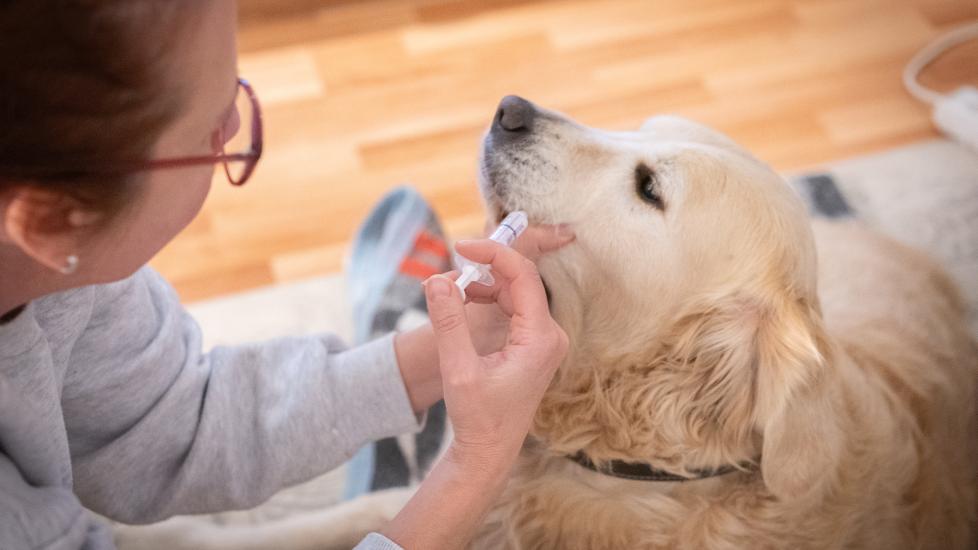
In certain circumstances, your vet may recommend a compounded formulation of trazodone.
Compounded medications are prescribed if there’s a specific reason your pet’s health can’t be managed by an FDA-approved drug, such as if your pet has trouble taking pills in capsule form, the dosage strength is not commercially available, or the pet is allergic to an ingredient in the FDA-approved medication.
Compounded medications are not FDA-approved. They are created by either a veterinarian or a licensed pharmacist on an individual basis to best suit a patient’s particular needs.
Trazodone Considerations for Dogs
Trazodone should not be used in dogs who are hypersensitive to trazodone.
Trazodone should be used with caution in pets with certain medical conditions, including heart disease, liver disease, kidney disease, and angle-closure glaucoma. Giving trazodone with certain medications can result in health risks to your pet—so it’s important to discuss your pet’s medications, including vitamins and supplements, and medical conditions with your veterinarian.
Trazodone may cause dogs to feel sleepy or groggy, so it may not be an ideal choice for working or assistance dogs because it can reduce their awareness.
How Trazodone Works in Dogs
Trazodone works in dogs by increasing serotonin levels in an animal’s central nervous system.
Serotonin is a chemical messenger that works in the brain to regulate behavior and other bodily functions.
Many common antidepressants, including selective serotonin reuptake inhibitors (SSRIs), also increase serotonin levels.
How To Give Trazodone to Dogs
How much trazodone to give a dog depends on their specific case. Follow the directions on the drug label or as provided by your veterinarian. They will prescribe a trazodone dose based on your pet’s body weight and the reason for its use.
Depending on your pet’s condition, your pet may need to be given trazodone daily or only as needed for anxiety-provoking events such as fireworks, thunderstorms, or veterinary visits.
Give trazodone as directed, usually at least 90 minutes before a triggering event.
Consult your veterinarian if your pet’s condition has not improved after starting trazodone.
Missed a Dose?
If you miss a dose of trazodone for your dog, speak with your veterinarian about what to do. Generally, they may instruct you to give it when you remember, or if it is almost time for your dog’s next dose, to skip the missed dose and resume your normal dosing schedule.
Do not give extra or double doses.
Possible Side Effects of Trazodone in Dogs
Trazodone is well-tolerated by most dogs.
The most common side effects are related to the digestive system, including:
Less common side effects may include:
-
Increased anxiety or agitation
Trazodone for dogs is often given with other behavioral drugs. Serotonin syndrome is a rare but serious condition that can occur when these drugs are given together, especially in large doses.
Seek immediate emergency care if the following signs of serotonin syndrome occur:
-
Vomiting or diarrhea
-
Seizures
-
Increased skin sensitivity (hyperesthesia)
-
Dilated pupils or blindness
-
Vocalizations (whining, crying)
-
Trouble breathing
-
Weakness or lack of coordination
-
Disorientation
Human Side Effects
While this is a human prescription medication, different dosages and side effects can occur in humans.
If you accidentally ingest a pet medication, call your physician or Poison Control at 800-222-1222.
Monitoring Your Pet
No specific monitoring is required for this medication, but your veterinarian may recommend routine testing depending on your pet’s individual needs, other medications they may be on, or the issue that initially caused your pet to be placed on this medication.
When To Call Your Vet
Call your veterinarian if you see any of the following:
-
Severe side effects, including signs of serotonin syndrome (see above)
-
Your pet’s condition worsens or does not improve with treatment
-
You see or suspect an overdose
-
You have additional questions or concerns about the use of trazodone
Trazodone Overdose Concerns in Dogs
An overdosage of trazodone in dogs may cause:
-
Sedation
-
Decreased energy level (lethargy)
-
Lack of coordination
-
Vomiting
Overdosage of trazodone in combination with other medications or supplements that affect serotonin levels could result in a serious condition called serotonin syndrome (see above). Immediate emergency treatment may be necessary.
If you suspect an overdose, immediately seek emergency veterinary care or contact an animal poison control center. Consultation fees often apply.
-
Pet Poison Helpline 855-764-7661
-
ASPCA Animal Poison Control 888-426-4435
How To Store Trazodone for Dogs
Keep the following storage tips in mind for this medication:
-
Compounded medications should be stored according to the compounding pharmacy’s label.
-
Trazodone should generally be stored at controlled temperatures of 68–77 F (20–25 C). Brief exposure to temperatures of 59–86 F (15–30 C) are acceptable.
-
Keep the container tightly closed to protect the medication from moisture and light.
-
Keep out of reach of children and pets.
-
Always confirm storage requirements by reviewing the label.
Trazodone for Dogs FAQs
How fast does trazodone work in dogs?
When used only as needed, trazodone will typically take effect in one to two hours.
When used daily, improvement in your pet’s behavioral condition may take a few weeks. However, you may notice gradual improvement before then.
How long does trazodone last in dogs?
Trazodone generally lasts about eight to 12 hours in dogs.
What is the biggest side effect of trazodone?
The biggest side effect of trazodone is digestive upset (vomiting, diarrhea, nausea).
Can trazodone cause diarrhea in dogs?
Yes, diarrhea is a possible gastrointestinal side effect with this medication, but in general, trazodone is well-tolerated by dogs.
What does trazodone do for dogs?
Trazodone is a prescription anti-depressant medication that can help dogs stay calm during certain anxiety-inducing events, such as separation, loud noises (thunderstorms or fireworks), and veterinary or grooming visits.
How much trazodone do you give a dog?
The safest way to know the proper dose of trazodone for your dog is to ask your veterinarian and follow the directions on the drug label.
Is trazodone safe for dogs?
Trazodone is generally considered safe for most dogs, as directed by their veterinarian. Speak with your vet first to ensure this medication is appropriate for your dog.
No vet writer or qualified reviewer has received any compensation from the manufacturer of the medication as part of creating this article. All content contained in this article is sourced from public sources or the manufacturer.
References