Scratches in Horses: Causes and Treatment



iStock/anjajuli
Not to be mistaken for a common scratch wound, scratches in horses refers to a skin infection of a horse’s leg that can reach from the heel all the way up to the cannon bone.
Key Takeaways
- Scratches can affect any horse at any time, however it’s more common in wetter conditions such as during rainy seasons.
- Scratches is caused by a combination of bacteria, fungi, and parasites that irritate the skin.
- Your vet may prescribe antibacterial, antifungal, steroids, or a mixture to apply to the scratches.
- Help prevent scratches by keeping a horse’s legs clean, clipped, and dry.
What Is Scratches in Horses?
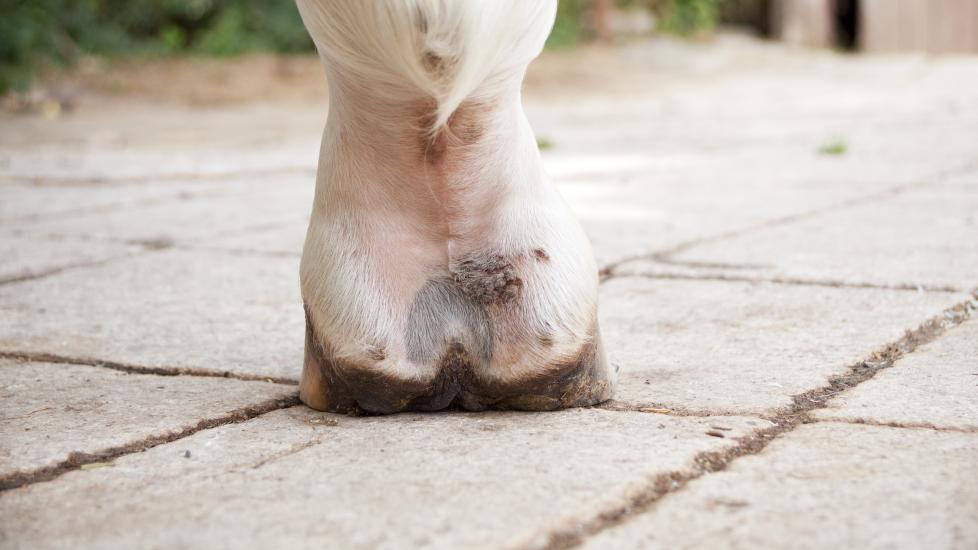
Scratches is a type of skin inflammation that appears on the back of a horse’s pasterns, usually caused by bacteria and fungi. Scratches typically presents as greasy or matted hair along the back of the pasterns and heel bulbs.
Scratches in horses goes by many names in the equine world, including:
-
Pastern dermatitis
-
Greasy heel
-
Dew poisoning
-
Mud fever
While this condition can be seen in any breed of horse, scratches is common in draft breeds, and in horses that have white or light hair along the lower limbs, or long “feathered” coats.
Scratches in horses is often seen in muddy or wet environments. These conditions make it easy for bacteria, fungi, and even parasites to move in.
Symptoms of Scratches in Horses
Symptoms of equine scratches include:
-
Scabs or greasy discharge (this usually starts along the heel bulbs or back of the pastern but can wrap around to the front of the foot, or up the leg toward the cannon bone)
-
Sensitivity to the touch, discomfort, or itchiness
-
Swelling
-
Redness
In severe or chronic conditions of scratches, the horse’s skin may become thickened and sometimes ulcerated which leads to deep, non-healing cracks.
Causes of Scratches in Horses
Scratches in horses is typically more common in the spring season when it rains more often or when horses are exposed to moist or muddy conditions.
One of the reasons draft breeds are more susceptible to scratches is because they have long feathered hair along their lower legs, which traps moisture.
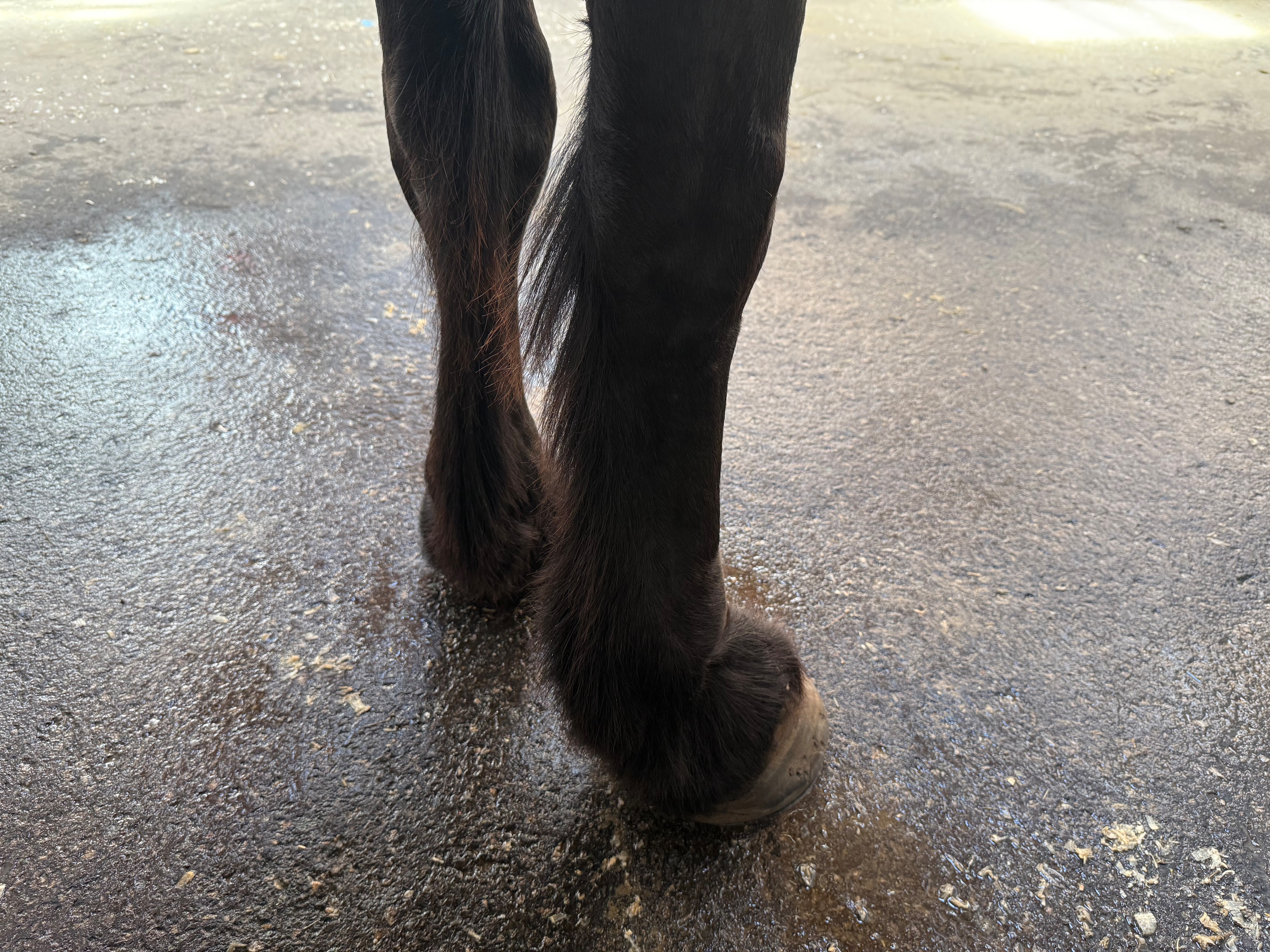
Horses with white or light-colored skin are more susceptible to scratches as well. These colors have less pigment, and therefore less protection against damage from sun rays and abrasions, which can both irritate the skin and predispose to infections like scratches.
Scratches in horses is often caused by a mixed bacterial infection, which gets into the body through small breaks in the skin. The infection can have a fungal component or can even be due to parasites such as mites causing mange.
How Veterinarians Diagnose Scratches in Horses
Veterinarians typically diagnose scratches based on your horse’s history and clinical signs of the infected area.
In severe or chronic cases of scratches in horses that aren’t responding well to basic treatment, a small biopsy or skin scrape may be recommended. This allows for the cells to be examined under the microscope and cultured to see which medications can best target the involved pathogens.
Equine Scratches Treatment
The major rule to remember when dealing with scratches in horses is “don’t scratch scratches!” This can make the infection worse as new bacteria are introduced to the site. If your horse is scratching, talk to your vet about medications that could help with itching such as an anti-inflammatory or steroid.
One of the best things you can do for your horse is to gently clip the hair away from the infected region to lessen moisture retention, improve air flow, and allow medication to penetrate the area well. It’s critical to not cut the skin by accident which can spread infection, so if your horse is fidgety or reluctant with the clippers, wait until your veterinarian arrives.
Your veterinarian may recommend using a medicated antibacterial/antifungal shampoo such as Ketohexidine. These should be left to sit on the skin for several minutes without vigorous scrubbing, then gently rinsed off. Before applying any topical medications, the leg should be dried well.
Your veterinarian will likely prescribe an antibacterial, antifungal, steroid, or a mixture to apply to the area daily. These may include silver sulfadiazine (SSD), an antibacterial/steroid topical like Animax, or a home-made combination such as SSD, Nitrofurazone, and dexamethasone combined as an example.
Depending on the severity of the infection, or if your horse also has local swelling or lameness, oral antibiotics may be needed.
Preventing Scratches in Horses
If recognized and treated early, most cases of scratches in horses resolve within a few weeks.
However, draft breeds and horses with lighter hair, or those live in wet environments, will need preventative measures implemented since they are more prone to getting repeat cases of scratches. These horses may experience more frequent episodes of pastern dermatitis or have chronic symptoms that are somewhat resistant to typical treatment.
Preventative or maintenance measures for equine scratches might include:
-
Keeping your horse in a dry, fluffy bedded stall, especially if it’s wet or muddy outside
-
Cleaning and wiping your horse’s legs dry after riding
-
If using protective boots, clean them frequently and don’t share between horses
-
Avoiding early morning turnout when there is dew on the ground
-
If a horse is chronically dealing with scratches due to the environment, they may do best in a drier climate
Of all the common skin conditions in horses, it’s important to remember that scratches can be avoided with proper care of your horse’s legs. But if your horse does get scratches, following proper treatment can help them feel and look better fairly quickly.
Scratches in Horses FAQs
What is the best way to treat scratches?
Treating scratches involves keeping the area dry and using appropriate antifungal/antibacterial shampoos and medications as instructed by your veterinarian.
Are scratches in horses contagious?
Scratches can spread to another horse if they share grooming equipment or have direct contact with infected skin.
How do I know if my horse has scratches?
Your horse may have scratches if they have scabs and discharge along the back of their pasterns that are sensitive to the touch. If your horse is a draft or has light skin, it’s important to check their legs frequently, keep them clean, and dry.
Do scratches go away?
Scratches can be resolved with appropriate treatment and environmental management. However, if your horse is prone to scratches, preventative practices should be implemented to decrease the frequency of symptoms.