The Risks and Alternatives to Declawing Cats



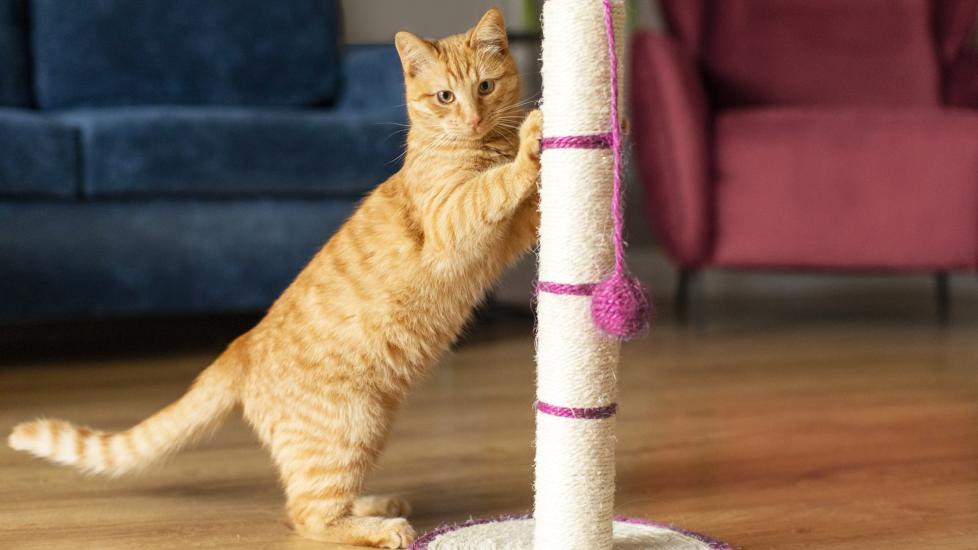
Olena Miroshnichenko/iStock / Getty Images Plus via Getty Images
There are many reasons why cats scratch, but it’s not always a behavior that pet parents appreciate.
Some people might consider declawing a cat the best way to deter cat scratching, but this is a controversial practice that many veterinary organizations, including the American Veterinary Medical Association (AVMA) and the American Animal Hospital Association (AAHA) discourage.
Here’s what to know about declawing cats, why veterinarians often oppose the procedure, and alternatives to declawing.
Key Takeaways
- Declawing is a surgical amputation of part of a cat’s toe bones.
- Declawing cats is often discouraged by veterinarians and is illegal in certain cities, states, and countries.
- Possible complications of declawing a cat include infections, behavioral changes, chronic pain, and nerve damage.
- Alternatives to declawing a cat include regular nail trims, providing scratching surfaces throughout your home, and using calming products.
- Always talk to your veterinarian before deciding whether to declaw your cat.
Health Tools
Not sure whether to see a vet?
What Is Declawing in Cats?
Declawing cats is a controversial surgical procedure that removes part of a cat’s toes.
Cats have three small bones that make up each toe, and declawing (onychectomy) is a surgical amputation of part (or all) of the toe bone attached to each claw. This procedure makes each toe shorter.
There are three different ways to amputate this bone: by using sterilized nail trimmers, a scalpel blade, or a surgical laser. The procedure is done under general anesthesia. Surgical glue (or stitches) is used to close the surgical openings, and bandages are placed to control bleeding.
Typically, your cat will stay one to two nights in the hospital to ensure the bleeding is sufficiently controlled. Healing takes between one and two weeks and requires special aftercare, such as pain medications and a special cat litter.
What Are the Risks of Declawing Cats?
Some pet parents may consider declawing a cat to stop scratching. But declawing is a controversial procedure that requires removing part of the cat’s toes and comes with many risks.
Infections
Infection is a possibility after all surgical procedures, including when declawing cats. Keeping a cat’s feet clean after surgery is difficult because your cat needs to walk and use the litter box.
Infections that happen after a declaw can be dangerous, especially if it affects the bones in the feet, so it’s important to watch for infection closely. Your veterinarian may also prescribe antibiotics as a precaution.
Pain and Nerve Damage
Pain is difficult to assess in cats because they don’t tend to express their pain in an obvious way that a pet parent would normally notice. Examples of pain you should watch for after declawing include:
-
Decreased movement
-
Lameness
-
Lifting the paws to avoid putting weight on them
-
Reluctance to jump or climb (both natural behaviors for cats)
In general, surgery involving bones is more painful than others.
Chronic, long-term pain after declawing a cat is rare, but it can happen. Possible causes include neuropathic pain (when the nerve signals abnormally to the brain), long-term inflammation, infection, or remaining bone fragments.
Studies have shown that declawed cats can have an increased risk of back pain or barbering (pulling out their hair) compared to non-declawed cats due to neuropathic pain, musculoskeletal pain, anxiety, and stress.
Paralysis can also occur as a complication of tourniquet use during surgery. It is usually temporary but can last up to two months.
Lameness
Lameness (abnormal walk or stance) can happen post-declaw for several reasons. The most obvious and common reason is surgical pain.
Other causes are related to the causes of long-term pain, nerve damage, or reopening of the surgical incision. In rare cases, lameness has occurred due to scarring that affects the movement of the toes. This requires follow-up surgical procedures to correct limb function.
Behavioral Changes
Cat scratching is a normal behavior, and not being able to scratch might cause emotional stress. Many cats will still perform the motion of scratching even after declawing, but it’s not clear if performing the scratching motion without nails is as satisfying for them.
This might lead to behavioral changes in your declawed cat, such as:
-
Increased aggression (such as biting)
While there are studies that show some behavioral changes can occur, it’s unclear if the behavior changes are due to the declaw procedure. More research is needed to better understand the relationship of declawing and changes in behavior.
Surgical Complications
All general surgeries have risks associated when anesthesia is applied. Some possible complications include, but are not limited to:
-
Allergic reactions to the anesthesia
-
Stroke/embolism
-
Cardiac arrest
-
Damage to the throat from a breathing tube
-
Nerve damage
-
Bleeding
-
Death
There are also complications that can occur post-surgery, such as pain, infection, or wound dehiscence (the reopening of the surgical site).
Is Declawing Cats Illegal?
Declawing cats is banned in a handful of areas within the U.S., including:
-
Maryland
-
Massachusetts
-
New York
-
Rhode Island
-
Virginia
-
Washington D.C.
Other states, such as Washington and California, have introduced bills to ban declawing that are currently in the legislative process. Some cities have also banned declawing:
-
Austin
-
Denver
-
Los Angeles
-
Madison, Wisconsin
-
San Francisco
-
St. Louis
-
Pittsburgh
The practice is also illegal in certain countries, including:
-
Australia
-
Austria
-
Belgium
-
Bosnia and Herzegovina
-
Brazil
-
Bulgaria
-
Cyprus
-
The Czech Republic
-
Denmark
-
England
-
Finland
-
France
-
Germany
-
Greece
-
Ireland
-
Israel
-
Italy
-
Latvia
-
Lithuania
-
Luxembourg
-
Macedonia
-
Malta
-
Montenegro
-
The Netherlands
-
New Zealand
-
Northern Ireland
-
Norway
-
Portugal
-
Romania
-
Scotland
-
Serbia
-
Slovenia
-
Spain
-
Sweden
-
Switzerland
-
Turkey
-
Ukraine
-
Wales
In Canada, declawing cats is banned in eight of the 10 provinces:
-
Alberta
-
British Columbia
-
Manitoba
-
New Brunswick
-
Newfoundland and Labrador
-
Nova Scotia
-
Prince Edward Island
-
Saskatchewan
-
Québec
Alternatives To Declawing a Cat
Scratching is normal behavior for a cat. Because it’s part of a cat’s nature to scratch, do not try to stop your pet from this instinct.
There are some ways, however, where the damage caused by cat scratching can be limited.
Nail Trims
Frequently trimming your cat’s nails can protect your skin and your furniture from severe scratches. You’ll need to do this every two to four weeks with a pet-safe nail clipper.
If you’re uncomfortable cutting your cat’s nails, you can schedule an appointment with your vet or with a professional groomer who can help.
Scratching Posts
If furniture damage is the main concern, a scratching post or horizontal scratching pad can be a suitable replacement for your cat to scratch.
Pay attention to the type of material your cat likes to scratch and match that as closely as possible. Also pay attention to the position scratching occurs, as some cats like to scratch vertically and some like to scratch horizontally.
Location is equally important—the scratcher should be in the same room as where the unwanted scratching happens. Using cat treats and/or catnip when your cat is near it can help encourage interest.
Calming Products
Cat calming products help create a feeling of safety and security to reduce anxiety. Commonly recommended products include pheromone diffusers, probiotic supplements, chewable treats, and calming capsules.
Talk with your vet to see which is the best calming product for your cat.
Deterrents
Deterrents can be used to discourage scratching on unwanted areas—but they should only be used after a suitable replacement has been provided, or your cat may simply find another piece of furniture.
Deterrents should be humane and not cause pain, panic, or severe distress. Ideas include placing undesirable textures (such as aluminum foil, rubber, or tape) on or around the furniture until your cat stops using it to scratch.
Using anything like a squirt bottle will only teach your cat to scratch when you’re not around and is usually not effective long-term.
Nail Caps
Cat nail caps, like Soft Claws, are tiny covers for your cat’s nails, and they’re another way to protect yourself and your furniture from scratches.
However, nail caps require regular maintenance and prompt replacement if they fall off. Some cats may not tolerate wearing them, so don’t force it if your cat isn’t comfortable.
Always talk to your veterinarian about your concerns before deciding whether to declaw your cat. They may be able to help you reduce your cat’s scratching damage without surgery.