Cat Asthma: What It Is, Symptoms, and Treatment



Jorge Aguado Martin/iStock/Getty Images Plus via Getty Images
Cats, too, can experience asthma just like people. The causes and treatment are similar, as are the symptoms and reduction in quality of life.
Cat asthma and cat asthma attacks can be a scary thing to witness.
Fortunately, this article includes everything you need to know about the disease and how it’s diagnosed. You’ll also learn how cat asthma is treated and how it can be managed at home.
Key Takeaways
- Cat asthma is a chronic, progressive respiratory condition caused by allergic reactions to inhaled irritants such as dust, smoke, and chemicals, and can lead to life-threatening asthma attacks if untreated.
- Common signs of asthma in cats include coughing, wheezing, difficulty breathing, and a crouched posture during attacks.
- While feline asthma can’t be cured, it can be effectively managed with daily anti-inflammatory medications—ideally through inhalers—and environmental changes like air purifiers and dust-free litter.
- Proper diagnosis involves physical exams and tests like chest X-rays and blood work, and ongoing treatment is essential even when symptoms appear to subside.
What Is Cat Asthma?
Cat asthma is a chronic respiratory condition characterized by inflammation (swelling) of a cat’s lungs and narrowing of their airways.
Asthma is triggered when a cat breathes in an allergen such as dust or pollen. This condition can be made worse by stress. Cats with asthma may show signs of coughing, difficulty breathing, and wheezing.
Although these symptoms may come and go, depending on your cat’s allergens, asthma will not clear up without long-term treatment.
Asthma is a medical emergency, especially if your cat is having an asthma attack.
As symptoms progressively worsen over time, your cat should be taken to the vet at the first sign of coughing. If your cat has trouble breathing, you should seek immediate veterinary attention.
What Is the Life Expectancy of a Cat With Asthma?
Asthma in cats is a progressive disease.
This means that symptoms will likely worsen with time, a cat’s quality of life will eventually become affected, and asthma attacks may occur quicker and last longer.
However, as an allergic disease, asthma is highly individualized, meaning some cats may be more affected by it than others.
While asthma can never be cured, the condition can be managed with appropriate medication and environmental modifications. Limiting potential allergens in the home can provide your cat with many good years of life.
Cat Asthma Symptoms
The most common signs include:
-
Difficulty breathing
-
Breathing that looks like it is coming from the belly instead of the chest
-
Increased respiratory rate
-
Noisy “wheezy” breathing
If a cat is having an asthma attack, they’ll typically have a crouched posture with their head and neck extended while coughing or wheezing.
What Causes Asthma in Cats?
Cat asthma is caused by an allergic reaction triggered when the cat inhales an allergen, such as:
-
Dust
-
Pollens
-
Dust mites
-
Mildew
-
Cat litter
Even being exposed to candles, hair spray, and room fresheners can trigger a flare-up in sensitive cats.
How Do You Diagnose Feline Asthma?
If you notice your pet is showing cat asthma symptoms, like difficulty breathing, you should visit an emergency vet immediately.
If your cat is coughing but still breathing normally, you can book a regular appointment. Once at your vet, your cat will usually have the following tests:
Some cats may also need more testing, which may include fecal tests for lung parasites as well as airway washes to investigate the cause of the lung inflammation.
An airway wash—typically called a transtracheal wash (TTW) or bronchoalveolar lavage (BAL)—is performed while a cat is under anesthesia. Saline is flushed through a catheter into a cat’s lungs and then suctioned back. This sample (which contains cells and mucus) is then sent off to be analyzed to help determine a cat asthma diagnosis.
In most cases, a cat asthma diagnosis is easy and straightforward to make—but some cats will require more extensive testing than others.
Cat Asthma Treatment
Because the primary problem involved in cat asthma is underlying inflammation, treatment is aimed at reducing this swelling.
Typically, it’s not possible to eliminate the allergens your cat is inhaling.
Even if your cat is not showing symptoms, they will need to take anti-inflammatory medication, with or without bronchodilators, such a terbutaline or albuterol, that help open the airways and reduce constriction. Steroids such as prednisolone or injectable Depo-Medrol may also be prescribed.
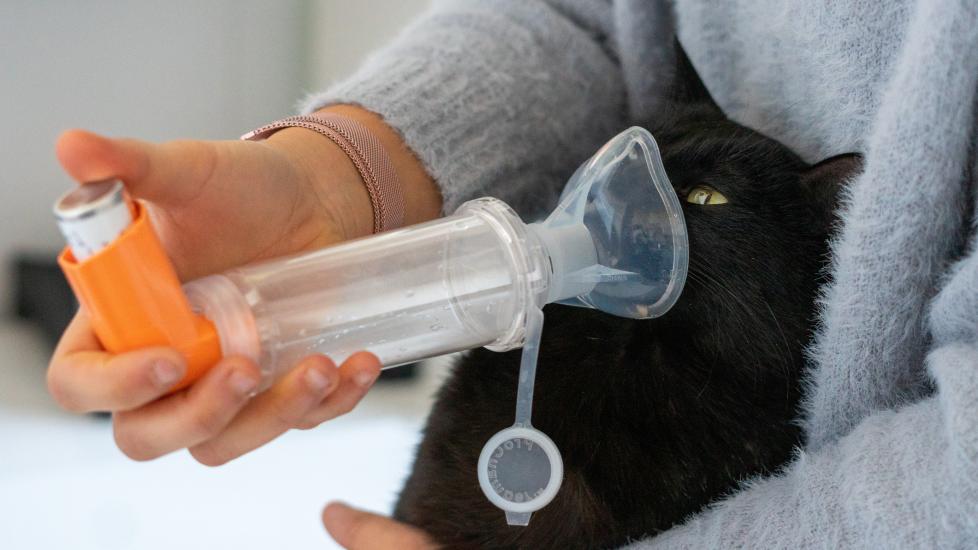
Long term, the safest way to give this medication is using an inhaler, much as would be done for humans with asthma.
Additionally, just as in people, limiting exposure (as much as possible) to inhaled irritants, like smoke and aerosols, could prove beneficial at reducing attacks.
Using an air purifier in the home along with routine air filter changes can be beneficial.
Switching to a dustless cat litter, like Tidy Cats Free & Clean Unscented Clumping Clay Cat Litter, can also help.
Keeping your cat at a healthy body weight is also a benefit at reducing attacks.
Some cats are treated with oral or injectable anti-inflammatories instead of inhaled medication. The risks of side effects are higher with the oral treatments, however, so inhalers are generally preferred.
With proper care, most cats with asthma will respond to treatment well and may only experience occasional flare-ups of symptoms.
However, even if your cat’s symptoms seem to disappear, it’s important to continue with treatment—the underlying inflammation is still simmering and can cause long-term disease.
How To Help a Cat Through an Asthma Attack
Cat asthma attacks can be a scary thing to witness. You can help your cat by doing the following three steps:
-
Remain calm and limit surrounding stressors for your cat. This may mean preventing other animals and people from coming near your cat and creating a calm and quiet environment.
-
Follow the directions of your veterinarian for how to administer rescue medication. If you have portable oxygen that has been prescribed, follow the instructions on how to use it properly.
-
Get your cat to the nearest veterinary hospital as soon as possible.
Cat Asthma FAQs
How can I treat my cat’s asthma at home?
After diagnosis, asthma is usually treated at home using inhaled anti-inflammatory medications daily, with a rescue inhaler to use if there’s a significant flare-up. Some cats will be treated (at least short-term) with oral medications in addition to, or instead of, inhalers.
Can asthma kill a cat?
Yes. Just as untreated asthma in humans can be fatal, the same is true in cats.
What does a cat with asthma sound like?
Some cats with asthma will cough and look like they are trying to bring up a hairball. Other cats will have an audible wheeze when breathing.
How much does it cost to treat a cat with asthma?
The cost to treat a cat with asthma depends on which medication your vet prescribes, where you choose to have that prescription filled, and the severity of the asthma. In all cases, however, proper treatment will likely be much less expensive than a single visit to an emergency facility for a cat that is struggling to breathe.
Does my cat have asthma or a hairball?
Asthma is a disease of the lungs, while hairballs come from the stomach. When cats with hairballs vomit their back is arched, and they vomit up fluid and hair, often while walking backward.
When cats with asthma cough: their neck and back are straight and parallel to the floor, and they don’t usually move backward while coughing. If you are not sure which symptom your cat has, it is best to video the event to show your veterinarian what is happening.