Can Dogs Eat Pears?



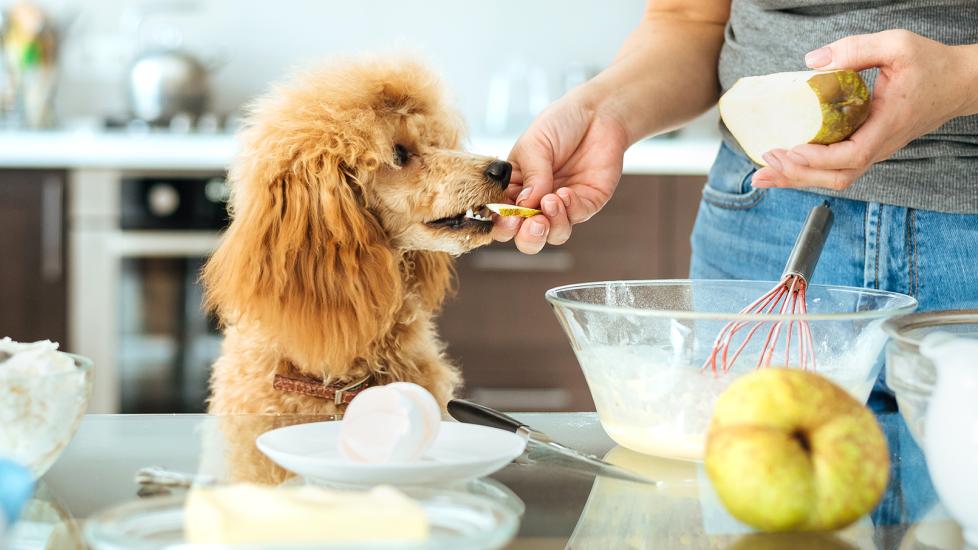
Rasulovs/iStock/Getty Images Plus via Getty Images
NOTE: Always check with your veterinarian before giving your dog any new foods, especially “people foods.” What might be OK for one dog might not be good for your dog, depending on multiple factors such as their age, health history, health conditions, and diet. Dogs on prescription diets should not be fed any food or treats outside the diet unless your veterinarian tells you it’s fine to do so.
Pears are a sweet, juicy fruit that many people enjoy, but can dogs eat pears safely? In moderation, yes. Dogs can eat the flesh of fresh pears, as long as the fruit is prepared properly. However, there are a few important safety tips pet parents should know before sharing this treat with their pup.
Key Takeaways
- Dogs can safely eat fresh pears in moderation, but they must be washed, cored, and cut into bite-size pieces for safety.
- Pears provide health benefits like fiber for digestion, antioxidants for overall wellness, and vitamins and minerals that support immunity, vision, and muscle function.
- Too many pears can upset your dog’s stomach, so stick to portion guidelines and remember that treats, including fruit, should make up no more than 10% of their daily diet.
Can Dogs Have Pears?
Yes, dogs can have pears in moderation.
Stick to plain, fresh pears. Popular varieties that are safe for dogs include Bartlett, Bosc, Anjou, and Comice pears—these are all sweet, juicy, and easy to digest when properly prepared.
Avoid canned pears or any pear products with added sugar, syrup, or artificial ingredients. These can upset your dog’s stomach or contribute to other health issues, like weight gain.
Not prepping pears at home? You can try store-bought dog treats and foods that include pears as an ingredient, like the following:
Are Pears Good for Dogs?
While pears aren’t an essential part of a balanced diet for dogs, they do offer several benefits. In addition to being relatively low in calories, here are a few of the top perks:
-
They support digestion. Pears are a good source of dietary fiber, which can help regulate bowel movements and keep your dog’s gut healthy.
-
They’re rich in antioxidants. Antioxidant compounds like flavonoids, anthocyanins, lutein, and zeaxanthin help neutralize free radicals and support your dog’s overall health.
-
They deliver immune-boosting vitamins. Pears contain a good amount of vitamin C, which helps support immune health. Dogs can’t make vitamin C on their own, so they need to get it from their diet.
Are Pears Bad for Dogs?
While pears are generally safe, feeding too much at once or preparing them incorrectly can cause problems. Here are a few reasons pears might not always agree with your pup:
-
Too much can cause upset stomach. Eating a large amount of pears at once may lead to vomiting, diarrhea, or stomach upset, especially if your dog isn’t used to high-fiber foods.
-
Seeds, stems, and leaves aren’t safe. These parts of the pear contain trace amounts of cyanide and can also pose a choking hazard or risk of intestinal blockage, especially in smaller dogs.
-
The skin may cause mild digestive issues. While safe for most dogs, the skin’s extra fiber can be tough for sensitive stomachs, so remove it if your dog is prone to digestive problems. (Keep in mind that if you do remove the skin, you’ll also reduce some of the zeaxanthin content.)
How Many Pears Can a Dog Eat?
Treats of any kind, including pears, should only make up 10% of your dog’s diet. The other 90% should come from a well-balanced dog food.
Portions should be based on your dog’s size and follow these guidelines (with a piece measuring about 1-inch wide by 1/4-inch thick):
| Dog Size | Serving Size | Frequency |
|---|---|---|
| Extra-small dogs (2–10 pounds) | 1 piece | 2–3 times per week |
| Small dogs (11–20 pounds) | 2 pieces | 2–3 times per week |
| Medium dogs (21–50 pounds) | 3 pieces | 2–3 times per week |
| Large dogs (51–90 pounds) | 4 pieces | 2–3 times per week |
| Extra-large dogs (91+ pounds) | 5 pieces | 2–3 times per week |
When feeding pears to your dog for the first time, start slowly and work your way up to the recommended serving sizes. If you’re concerned about your dog’s individual diet or have questions about treats based on their specific health needs, contact your veterinarian.
How To Safely Feed Pears to Dogs
Taking a few simple precautions before feeding any pears to your pup ensures you’re giving them the nutritional benefits without unnecessary risks. Make sure to:
-
Wash thoroughly. Rinse the pear under running water to remove dirt and any pesticide residue that may be lingering on the skin.
-
Remove the stem, leaves, core, and seeds. Any of these could become a choking hazard or cause an intestinal blockage. Plus, the seeds, stem, and leaves of a pear all contain trace amounts of cyanide and should never be eaten, just like apple seeds. The skin is fine if your dog can tolerate it, as long as it’s thoroughly washed.
-
Cut into bite-size pieces. Chop the pear into small, even chunks that are appropriate for your dog’s size. This helps prevent choking and makes the fruit easier to digest.
If you’re looking for fun ways to feed pears to your dog, here are some vet-approved methods:
-
Use pears a food topper. You can add a few pieces of chopped or mashed pears to your dog’s regular food.
-
Blend a pear fruit smoothie. Blend up some pear pieces with other dog-safe fruits like bananas, blueberries, or peaches. You can use this as a food topper or spread it on a lick mat, like the Woof Slow Feeder Mat, for a special treat.
-
Make pear yogurt or frozen yogurt.
-
Mash up some pear pieces and mix them with plain, sugar-free, xylitol-free yogurt (xylitol is toxic to dogs). You can also mix in some of the other dog-safe fruits mentioned above and feed them to your pup as a cold treat in a bowl.
-
Freezing the fruit pieces the night before and blending the frozen fruit with the plain yogurt also makes a dog-friendly frozen yogurt.
-
-
Stuff a KONG toy. You can stuff any of the mixtures above in your dog’s KONG toy as a cold treat or freeze it for a refreshing frozen snack later. (Pro tip: Frozen treats are also helpful in keeping your pup busy and mentally stimulated!).
What Other Fruits Can Dogs Eat?
There are plenty that are safe and healthy for dogs to eat (and a few that aren’t).
While you shouldn’t give your fur baby cherries or avocados, other dog-safe fruits include:
-
Bananas
-
Blueberries
-
Peaches
Instead of plain fruit, you can give these to your dog in store-bought treats. Some highly rated options include:
Can Dogs Eat Pears FAQs
Can dogs eat Asian pears?
Yes, Asian pears are safe when prepared properly and served in appropriate portion sizes.
Can dogs eat pears with skin?
Yes, as long as it’s washed. The skin can cause stomach upset in sensitive dogs, though, so you might want to remove it if your pup has tummy troubles.