Thunderstorm Phobias in Dogs: How to Manage Dog Storm Anxiety

hidako/iStock/Getty Images Plus via Getty Images
Canine thunderstorm anxiety is a disorder characterized by a persistent and exaggerated fear of storms or the stimuli that are associated with storms.
This phobia is complicated and sometimes difficult to manage because it involves physiological, emotional, and behavioral components.
Thunderstorm phobia occurs in both dogs and cats, but dogs are more susceptible to this type of fear.
Key Takeaways
- Thunderstorm phobia in dogs involves fear triggered by various storm-related stimuli and can significantly affect a dog’s health and quality of life.
- Management strategies include environmental changes, calming products, supplements, behavioral training, and possibly prescription medication.
- Product tools like calming vests, pheromones, supplements, and FDA-approved medications can help manage storm anxiety.
- Offering comfort during a storm is encouraged and does not reinforce fear.
Why Are Dogs Scared of Storms?
The exact cause of dog storm anxiety is unknown, but it may include a combination of the following factors:
-
Lack of exposure to storms early in development
-
Unintentional reinforcement of the fear response by owners
-
A genetic predisposition for emotional reactivity (the condition appears to be more common in herding breeds)
Dogs can react to a variety of stimuli associated with storms, including the sound of thunder, dropping barometric pressure, rain, flashes of lightning, and electrical charges within the air.
What Are the Signs of Dog Storm Anxiety?
Dogs can exhibit a variety of responses or behaviors in reaction to a thunderstorm. Some common signs of dogs experiencing thunderstorm phobia include:
-
Pacing
-
Trembling
-
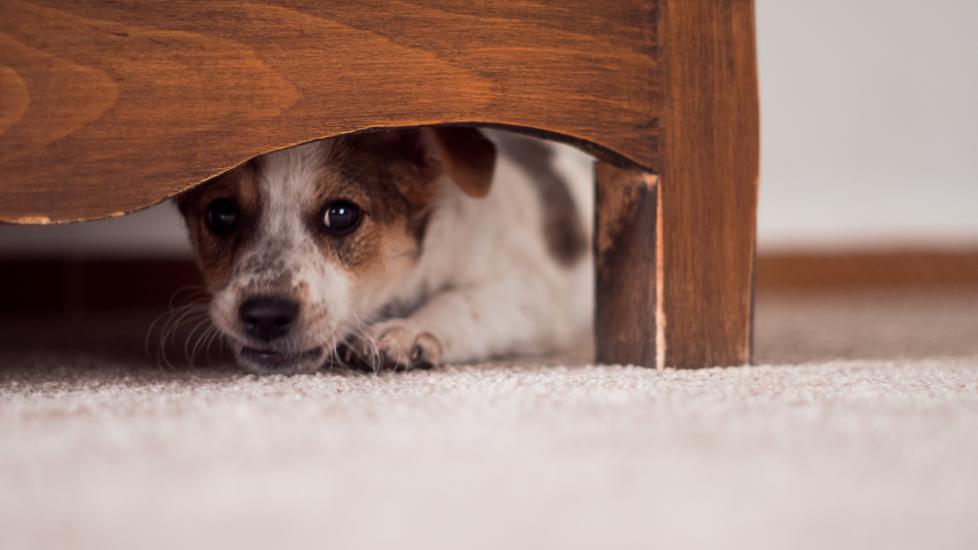
Hiding or remaining near a pet parent during a storm
-
Destructiveness
-
House soiling HYPERLINK "https://www.petmd.com/dog/general-health/incontinence-senior-dogs-what-do-and-how-help" (peeing or pooping in the house)
How Is a Thunderstorm Phobia in Dogs Diagnosed?
Your veterinarian will need to rule out any conditions that can cause similar behavioral responses, such as separation anxiety, pain, and neurological problems.
Additional testing may be necessary to ensure that the dog is healthy enough to be given anti-anxiety medications, if that is deemed necessary.
How Does Thunderstorm Anxiety Affect Your Dog Physically?
Fear, anxiety, and stress can affect body systems in a variety of ways, including:
-
Cardiovascular: High heart rate
-
Endocrine/metabolic: Increased cortisol levels, stress-induced hyperglycemia
-
Gastrointestinal: Loss of appetite, gastrointestinal upset
-
Musculoskeletal: Trauma resulting from escape attempts
-
Respiratory: Rapid breathing
-
Dental: Damage to teeth and gums from attempts to hide or escape
-
Skin: Cuts or bruises on face or paws from escape attempts
If your dog’s thunderstorm phobia is severe and storms occur with some regularity where you live, the chronic effects could lead to a decreased quality of life and potentially problems like immune dysfunction and an increased risk of infection.
Talk with your veterinarian to decide the best way to approach and help manage your dog’s anxiety-induced behaviors.
What Can You Do To Relieve Dog Storm Anxiety?
Most dogs cannot be cured of their thunderstorm phobias, but management is possible.
In a study published in 2003, 30 out of 32 dogs showed significant improvement in their symptoms with appropriate medication and behavior modification treatment.
It’s ideal to plan ahead and try to anticipate anxious events. Watch the news so you can follow the local weather, then begin calming your dog before the storm hits your area.
Comfort Your Dog
It’s perfectly acceptable to offer comfort if your dog seeks it during a storm. It’s a common misconception that doing so might accidentally reinforce your dog’s fear, but fear is a visceral response that can’t be altered by petting or kind words.
Never punish your dog for its fearful behavior. This will make your dog’s anxiety even worse, since your dog will then learn to associate storms with punishment.
Create a Calming Environment
Play some calming music or turn on a white noise sound machine to help mask the sound of the storm.
Offer your dog a soft bed with their favorite toys, or opt for a food puzzle or interactive toy that can be stuffed with canned food such as Hill’s Adult Sensitive Stomach and Skin Wet Dog Food or their favorite dog treats.
Create a safe, calm space where your pet cannot hurt themselves, such as a crate. You can even cover the crate with a blanket to decrease visual stimulus and mute loud sounds.
Your dog’s safe spot can also be a basement, interior room, closet, or bathroom. You can choose a space with few windows (covered with blinds or blackout curtains) or no windows so your dog does not notice darkening skies or lightning.
You can also decrease auditory stimulus by conditioning your dog to wearing headphones.
Try a Dog Anxiety Vest
Body wraps like the ThunderShirt help to ease anxiety in fearful dogs, but it’s important to allow your dog enough time to acclimate to the vest prior to using it during a storm.
Introduce the garment slowly and use treats to help your dog make a positive association to it. The ThunderCap is a great addition to the ThunderShirt to allow your dog to comfortably move around while decreasing negative stimulants like flashing lights.
Surround Them With Dog-Appeasing Pheromones
Calming pheromones like those included in Adaptil diffusers, collars, and sprays are another good option.
Give Them Calming Supplements
Anxiety-relieving nutritional supplements like Nutramax Solliquin calming chews and VetriScience Composure behavioral health chews may also help dogs that are scared of thunder or other stimuli associated with storms.
Ask Your Vet About Anti-Anxiety Medications and Behavioral Modification
Prescription anti-anxiety medications for dogs are sometimes needed with more severe storm phobias or for dogs who do not respond to over-the-counter treatments.
Your veterinarian can also recommend a behavioral modification plan to help your dog learn to remain calm when a thunderstorm approaches.
While your veterinarian has many prescription options to help treat thunderstorm phobia, you may want to talk to them about a product called Sileo. It's the first and only FDA-approved noise aversion treatment for dogs.
Thunderstorm Phobias in Dogs FAQs
Should I cuddle my dog during a thunderstorm?
Yes. You should comfort and pet your dog during a thunderstorm. You can also ask your dog to perform a command or behavior (such as sit) and if your dog performs it, your dog offer a reward such as scratching or a treat. This helps your dog feel safe.
Are there home remedies for dogs scared of thunder?
Yes. Home remedies for dogs scared of thunder include providing a safe space for your dog (like an interior room or a crate with a soft bed), shielding them from the sounds (by using a white nose machine, fan, or music) and sights (blanket over the crate, closing curtains and blinds) associated with storms. You can also provide calming pheromones and supplements approved by your vet.
Why is my dog suddenly terrified of thunderstorms?
Dogs of any age and breed can become suddenly terrified of thunderstorms when they develop a fear response from a negative association with thunder and lightening.
A dog with an underlying health problem (pain, internal issue, heart issue, neurological issue, or doggy dementia) may also suddenly develop behavioral problems and fear of storms.
What is storm phobia in dogs?
Storm phobia is a specific type of fear response that a dog displays from the clues that appear even before a storm arrives, such as darkening skies, rain, gusts of wind, the scent of ozone, and changes in barometric pressure. Dogs with storm phobia may even continue to show fearful behavior for hours to days after the storm is over.